
The Partnership Advantage
Part 1: The Hidden Value of Vendor Partnerships

Welcome to The Partnership Advantage, a three-part series exploring what separates a vendor from a true business partner. Throughout the series, we’ll examine how strong vendor relationships create long-term value, why they deserve ongoing evaluation, and what distinguishes organizations that view suppliers as strategic partners rather than transactional resources.

In this first part, we explore why the right vendor relationship can become one of a company’s most valuable competitive advantages.


Every leadership team spends considerable time evaluating investments that promise to improve the business.

Technology purchases are scrutinized. Capital expenditures are carefully planned. New hires are evaluated against long-term organizational needs. Facilities are expanded or upgraded with future growth in mind.

These decisions receive close attention because leaders understand that the right investments can improve performance, strengthen the organization, and create measurable value.

Yet one of the most influential investments a business makes is rarely evaluated with the same strategic lens and does not appear on a balance sheet.

It is the quality of the organization’s vendor relationships.

Most companies evaluate vendors using familiar criteria: price, capabilities, quality, responsiveness, and delivery. Those are essential considerations, particularly when establishing a new relationship. But over time, the value of a great vendor extends well beyond the products or services it provides.

The strongest vendor relationships become strategic business assets.

Whether it is your printer, creative and production partner, or logistics and fulfillment provider, an exceptional vendor can become an extension of your organization. The partner learns how your business operates, understands what matters most, anticipates potential challenges, and looks for ways to make the work better.

That kind of relationship cannot be measured by a purchase order.

It is built through trust, shared experience, and a mutual commitment to continuous improvement.

The Difference Between a Vendor and a Partner

There is an important distinction between a company that fulfills requests and one that helps improve your business.

A Vendor waits for instructions; a Partner looks for opportunities.

A Vendor completes the work that was requested; a Partner asks whether there is a better way to accomplish the objective.

A Vendor measures success by delivering the project; a Partner measures success by helping your organization achieve its goals.

The distinction may seem subtle, particularly when both companies provide reliable service and meet their contractual obligations. But over time, it changes the nature of the relationship. A traditional vendor conversation focuses on schedules, pricing, quantities, specifications, and delivery dates.

A partnership conversation expands to include strategy, innovation, efficiency, risk, customer expectations, and long-term planning. The partner is not merely asking, “What do you need us to produce?”

The partner is also asking, “What are you trying to accomplish, and how can we help you accomplish it more effectively?”

That is where meaningful business value begins to accumulate.

Institutional Knowledge Is a Competitive Advantage

Every organization develops its own way of working, with some of that knowledge documented in procedures, specifications, or contracts, but much of it remaining undocumented.

Experienced partners understand the details that only become apparent after years of working together. They know your annual production cycles, your busiest seasons, your approval process, your quality expectations, and the personalities of the people involved in bringing projects to completion.

They know which decisions require additional time. They understand where delays are most likely to occur. They recognize which details are especially important to your customers. They may even know when a seemingly small change will create complications elsewhere in the process. That institutional knowledge creates momentum.

Instead of beginning each project by relearning your preferences, experienced partners begin where the last successful project ended. They remember what worked; they remember what did not. More importantly, they use that knowledge to recommend improvements. The conversation shifts from:

“How would you like us to handle this project?”

to:

“Last year we improved this workflow. We have another idea that could make it even more efficient.”

Consider the difference between onboarding a new provider and working with an experienced partner. A new provider may be highly capable, but the organization must still explain its expectations, document its preferences, introduce key contacts, communicate exceptions, and identify potential obstacles. An established partner already understands much of that context.

The value is not simply convenience. It is the ability to make better decisions more quickly because both organizations are working from a deeper level of understanding. That continuity saves time, reduces mistakes, and allows everyone involved to focus on creating value instead of recreating understanding.

Small Improvements Become Significant Advantages

Business transformation is often portrayed as a single breakthrough idea. A new platform is introduced. A major system is replaced. An innovative product changes the market. An acquisition creates immediate scale. Those moments certainly matter.

In reality, however, most organizations improve through a series of small, thoughtful refinements. The best vendor relationships encourage that process.

Trusted partners continually ask questions. Can this workflow be simplified? Can approvals move faster? Can production be scheduled more efficiently? Can technology eliminate unnecessary steps? Can communication improve? Can quality become more consistent?

Each improvement may appear modest on its own. Perhaps a revised proofing process saves a day. A scheduling adjustment improves turnaround. A technology investment creates new capabilities. An operational change reduces manual work. A different delivery sequence prevents a recurring bottleneck. A more proactive planning conversation helps an organization avoid a predictable seasonal challenge.

None of those changes may be revolutionary. But collectively, they can transform the efficiency of an organization over several years.

This is one reason long-term partnerships can become more valuable with time. The relationship creates a foundation for continuous improvement. Each successful change provides insight that can support the next one.

Instead of repeatedly resetting the relationship, both organizations continue building upon what they have learned together. The most valuable partnerships do not simply repeat the same process year after year. They make each year a little better than the last.

Trust Changes the Conversation

Trust is often described as the foundation of a successful relationship. That is certainly true. But trust also changes the kinds of conversations organizations are willing to have.

When trust exists, vendors become comfortable asking difficult questions. Is there a better approach? Is this process still serving your organization? Have your business priorities changed? Would another solution create greater value? Is a long-standing requirement still necessary, or has it simply become part of the routine?

These questions are important because organizations can become accustomed to processes that no longer serve them well. A trusted partner can provide an outside perspective without losing sight of the practical realities of the business.

Likewise, customers become more willing to discuss future plans, business challenges, growth strategies, and operational concerns because they know those conversations will lead to constructive ideas rather than sales presentations.

They may share that a product launch is being considered, that an internal team is changing, that a longstanding process is becoming difficult to manage, or that customer expectations are shifting.

That information gives the partner an opportunity to think ahead. It may lead to a new workflow, a different production strategy, a technology recommendation, or a solution the customer would not have known to request.

This level of collaboration cannot be established overnight. It develops through consistency. It grows through transparency. It is reinforced every time both organizations demonstrate that they are committed to solving problems together.

Trust does not mean avoiding disagreement. In strong partnerships, trust makes disagreement more productive.

A good partner should be willing to say that a proposed schedule introduces unnecessary risk, that a familiar process is no longer efficient, or that an alternative approach may produce a better result.

The customer, in turn, should feel confident that the recommendation is being made to support the business rather than simply to make the vendor’s job easier.

Those conversations often become the source of an organization’s next improvement.

Experience Reduces Risk

One of the greatest contributions an experienced partner makes is often invisible, as risk reduction rarely appears on an invoice. Yet it may be one of the most valuable services a trusted vendor provides, since experienced partners recognize warning signs early because they have encountered similar situations before.

They identify scheduling conflicts before deadlines are affected. They recognize production challenges before they become quality issues. They anticipate supply chain concerns before they interrupt operations. They notice opportunities to simplify complex workflows before inefficiencies become accepted practice. They understand which details require additional attention and which decisions cannot be delayed.

That experience becomes especially valuable when circumstances change unexpectedly. A deadline moves. A supplier encounters a disruption. A key employee becomes unavailable. Customer requirements change late in the process.

An experienced partner does not need to begin by learning the organization while also solving the problem. The partner already understands the business context and can respond more effectively.

Many of the greatest successes in business are never noticed because the problems they prevented never occurred.

That is the quiet value of experience. It is not simply responding well when something goes wrong; it is helping ensure that fewer things go wrong in the first place.

Risk reduction may not be as visible as a lower unit price or a new capability, but its value becomes clear when a critical project remains on schedule, a costly mistake is avoided, or a potential disruption is addressed before it affects the customer.

Great Partnerships Adapt as Businesses Change

No successful organization remains static. Markets evolve. Customer expectations shift. Technology advances. New products are introduced. Business priorities change.

The vendors that supported your organization five years ago should be helping you prepare for what is next, not simply repeating what worked in the past.

Strong partners evolve alongside their customers. They continue investing in technology. They develop new capabilities. They learn new skills. They recommend different approaches when circumstances change.

They also make an effort to understand how the customer’s broader business is changing. Perhaps an organization is moving toward greater personalization. Perhaps it needs shorter production cycles, more flexible quantities, improved data integration, or greater visibility throughout the process. Perhaps internal resources are becoming more limited, creating a need for the partner to assume additional responsibility.

A strong partner recognizes these changes and adjusts accordingly. This does not mean adopting every new technology or replacing every established process. It means continually evaluating whether the current approach remains the right one.

Relationships that fail to evolve eventually become transactional.

Relationships that continue adapting become increasingly valuable.

Partnership Is a Two-Way Commitment

Organizations often ask whether their vendors are behaving like strategic partners. It is equally important to ask whether they are creating the conditions that allow vendors to contribute strategically.

A vendor cannot anticipate long-term needs if it is only given information about the next order. It cannot recommend meaningful improvements if it is excluded from planning conversations. It cannot solve the underlying business problem if it is only asked to quote a predetermined solution.

The strongest partnerships require participation from both organizations. Customers need to provide context, communicate goals, share concerns, and invite ideas.

Partners need to listen carefully, invest time in understanding the business, and offer recommendations that genuinely support the customer’s objectives.

That level of openness may require a different kind of conversation. Instead of asking only, “Can you produce this?” The organization may need to ask:

  • “What are we overlooking?”
  • “Where do you see opportunities to improve?”
  • “What are other organizations doing differently?”
  • “What should we be preparing for next?”

Those questions can unlock expertise that may otherwise remain underutilized.

Long-Term Relationships Still Need to Be Earned

None of this suggests that longevity alone should be celebrated. Organizations should never continue working with a supplier simply because “that is how we have always done it.” Every relationship should continue earning its place.

The best partnerships do exactly that. They continue investing. They continue improving. They continue bringing new ideas. They continue demonstrating why the relationship deserves to continue. They remain responsive when conditions change. They accept accountability when mistakes occur. They bring the same level of attention to an established customer that they brought to winning the business in the first place.

When those qualities disappear, it is appropriate to ask difficult questions. A long history does not excuse declining service, limited innovation, or a lack of strategic engagement.

But when a partner continues creating value year after year, the institutional knowledge, trust, and shared experience within that relationship should not be underestimated.

When those qualities remain present, the relationship itself becomes a competitive advantage.

Vendor Relationship Check

Take a few minutes to consider these questions.

  • Which of our vendors understands our business well enough to anticipate our needs?
  • When was the last time a trusted partner recommended an improvement we had not considered?
  • Which vendor relationship has become more valuable over time because both organizations continue investing in it?
  • Are we treating our best vendors as strategic partners or simply as suppliers?
  • Are we giving those partners enough information and access to contribute at a higher level?

The answers may reveal that some of your organization’s most valuable assets are not found on a balance sheet. They are found in the strength of the relationships you have built.

Looking Ahead

Strong partnerships create tremendous value, but they should never be taken for granted.

In Part Two of The Partnership Advantage, we will explore how to recognize when a vendor relationship has stopped creating value, why those situations often develop gradually, and how an honest conversation can sometimes strengthen a partnership before more significant changes become necessary.

A Fry Perspective

For more than 90 years, Fry Communications has seen how strong client relationships can evolve into true business partnerships. Those relationships are not built on transactions alone. They are built on trust, shared knowledge, continuous improvement, and a mutual commitment to helping one another succeed.

We believe organizations deserve partners who do more than fulfill orders. The right partners should help you think differently, improve continuously, address challenges early, and prepare for what comes next.

Because the best vendor relationships are not measured by how long they have lasted.

They are measured by how much stronger they help your business become.

Stand Out Without Overspending: The Power of Hybrid Print

Publishers and catalogers face a constant challenge: how do you keep costs low while still producing print pieces that stand out? Offset printing remains the most economical choice for high-volume runs, but audiences increasingly expect personalization, relevancy, and creativity that traditional methods alone can’t always provide.

At Fry Communications, we believe the solution isn’t an either/or choice—it’s a seamless hybrid model that combines the strengths of both offset and digital printing.

The Cost–Creativity Challenge

  • Keeping costs low: Offset printing delivers unmatched economies of scale, consistency, and quality.
  • Standing out: Today’s readers expect more—covers that grab attention, offers that speak directly to them, and editions that feel unique.

Balancing these two pressures requires more than tradition—it requires innovation.

Fry’s Hybrid Advantage

Fry’s hybrid print model blends the cost-efficiency of offset with the agility of digital enhancements. This approach allows publishers and catalogers to maximize impact while staying on budget.

  • Offset for the core: Large runs produced with efficiency and quality.
  • Digital for impact: Flexible, targeted enhancements like customized covers, personalized offers, and regional editions.

And here’s what makes Fry unique: our diversified single campus houses both conventional and digital capabilities. That means seamless combinations, faster turnaround, and the flexibility to create exactly what your project demands—without the inefficiencies of outsourcing or splitting production.

What’s Possible with Fry

  • Customized Covers: Swap imagery, artwork, or messaging per audience segment or market.
  • Personalization at Scale: Add subscriber names, tailored promotions, or curated product recommendations.
  • Agile Campaigns: Quickly test variations, launch seasonal editions, or update messaging—all without retooling entire runs.

Why It Matters

In today’s attention economy, Fry’s hybrid approach empowers you to:

  • Maintain cost efficiency with offset.
  • Deliver standout print experiences with digital.
  • Leverage data-driven personalization to increase engagement.
  • Enjoy seamless production from a single, diversified campus that combines all capabilities.

By reinvesting in both offset and digital platforms—and keeping them together on one campus—Fry ensures you never have to compromise between efficiency and creativity.

The takeaway: Fry Communications’ hybrid model, powered by our diversified single campus, is more than a middle ground—it’s a competitive advantage that makes print work harder, smarter, and more relevant than ever.

Want to see a sample of the hybrid advantage? Request your copy here.

Beyond Price and Quality: Building Success on a Stable Foundation

Price and quality often dominate vendor decisions — and understandably so. But long-term success also depends on stability. A truly stable print partner ensures consistent service, strong relationships, and reliable results, giving publishers, catalogers, and content providers peace of mind. In today’s unpredictable business climate, choosing a resilient partner isn’t just smart — it’s essential.

Fry Communications has built that kind of stability over decades. As one of the few remaining privately held, debt-free printers, we’ve prioritized long-term strength over short-term gains. Our lean, responsive management structure allows us to move quickly and make decisions based on customer needs — not shareholder demands. Every dollar earned is reinvested into technology, talent, and infrastructure to keep us competitive and our clients moving forward.

Real Benefits from Real Stability

Our consistent investment has led to real advantages: advanced print capabilities, improved efficiencies, and higher wages to attract skilled talent. It’s what has helped us and our clients stay competitive through more than a decade of rising costs, paper shortages, and industry-wide challenges.

A legacy of thoughtful, deliberate leadership hasn’t delivered stability just for its own sake — it’s delivered measurable, customer-centered results.

Stable by Design — Fry’s Advantage in a Shifting Industry

Consider this: since 2020, there has been a steady stream of closures among printers. Economic pressures, digital shifts, and private equity-led restructuring have pushed many to reduce capacity or shut down altogether. Some of the industry’s largest providers have cut locations in the name of cost control.

Fry has taken a different path. All of our production sites have remained open and fully functional. And while others cut back, we invested — 3.5 times more (adjusted for size) than our largest competitors. That decision, made by a financially independent leadership team, wasn’t driven by Wall Street but by our long-term view of client needs.

In a time of industry contraction, Fry stands steady: fully operational, well-equipped, and ready to grow with our clients.

Meeting Today’s Challenges — and Tomorrow’s

The pressures haven’t stopped. USPS rate increases, workforce retirements, and rising material costs continue to affect everyone. But Fry is prepared. We offer in-house co-mail, comingle, drop ship, and presort capabilities to reduce postal costs. We’ve built an inclusive, skilled workforce trained on industry-leading technology to meet the next wave of efficiency demands.

We’re also adopting tools that will shape the future of print and service delivery. From leveraging AI to support internal workflows and analyze operational data, to prototyping smarter ways to integrate customer files into the production process, Fry is turning innovation into practical value. We’re also using 3D printing to reduce part replacement delays and extend equipment life — improving efficiency without inflating costs.

It’s all part of our commitment to innovate in ways that directly solve real-world challenges for our clients.

Focused on What Matters Most

Our focus remains clear: deliver lasting value to the clients and employees who rely on us. With a stable foundation, continuous investment, and a commitment to operational excellence, Fry is positioned to meet today’s demands — and tomorrow’s.

Fry Communications: Blending Innovation with Tradition

The printing industry has always been a dynamic force—shaped by the evolving needs of communication, commerce, and creativity. At Fry Communications, we embrace this constant motion. For decades, we’ve stood at the intersection of tradition and innovation, where legacy craftsmanship meets forward-looking technology. Our commitment is twofold: to honor the trusted practices that have earned us our reputation for quality and service, while also investing strategically in the future—leveraging breakthroughs like artificial intelligence, automation, and 3D printing. This balanced approach allows us to offer our customers the best of both worlds: cutting-edge solutions delivered with the personalized attention and tailored service they’ve come to expect.

A Legacy of Innovation

Innovation is part of Fry’s DNA. From the early adoption of desktop publishing and computer-to-plate technology to groundbreaking advancements like Sunday presses, inline UV and cold foil systems, and 4-color inkjet presses, we’ve continually expanded the boundaries of what’s possible in print. Our integration of inserting machines, co-mailing, and robust online inventory systems keeps us agile and responsive to our clients’ evolving needs.

The revolution sparked by the personal computer transformed our operations—and we didn’t hesitate to act. Today, our equipment is driven by advanced IT systems, replacing outdated mechanical processes with software controls that boost precision, speed, and repeatability. Modern camera systems further enhance this, detecting and correcting on-the-fly variations both during printing and at the bindery.

AI, Cobots, and the Push for Efficiency

We are now in the era of artificial intelligence and collaborative robots (cobots). AI powers intelligent scheduling, predictive maintenance, and smarter quality control. Cobots—small, nimble robots designed to work safely beside humans—handle repetitive or ergonomically challenging tasks, improving consistency while lightening the load on our workforce.

These innovations are part of a broader strategy to manage the rising operational costs that are impacting the entire industry. From increasing postal rates to material and supply chain challenges, external pressures continue to drive up the cost of doing business. By investing in technology that enhances efficiency and reduces labor intensity, we are helping to stabilize our operations and absorb many of these market-driven cost increases—so our customers aren’t the only ones bearing the burden.

3D Printing: Our Next Frontier

Our investment in 3D printing is another exciting chapter in our evolution. This technology opens new doors for innovation and responsiveness. Specifically we are piloting a program for integrating 3D printing into our internal operations—particularly in parts replacement and maintenance. As supply chains tighten and critical machine components become less predictable and more expensive, our ability to manufacture replacement parts in-house enhances our dedicated mechanical maintenance program—giving us greater control, reducing downtime, and keeping production lines moving efficiently.

Rooted in Craftsmanship and Care

Despite all our technological advances, one thing has not changed: our belief in the value of skilled, hands-on work. Our press rooms along with our machine and hand bindery lines, continue to provide artisanal craftsmanship that can’t be automated—offering custom, intricate, and high-touch solutions that bring our clients’ visions to life.

Looking Ahead, Holding True

Fry Communications is future-facing, always scanning the horizon for what’s next. But we remain grounded in the same principles that have guided us since 1934: personal attention, reliability, and deep industry expertise. Our investments in technology are not a departure from who we are—they are an extension of our commitment to doing things better, faster, and smarter, while staying true to the people and practices that make Fry unique.
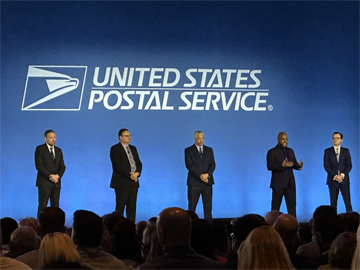

Navigating USPS Modernization: What It Means for Print Mailers

This year’s USPS National Postal Forum saw its highest attendance in 15 years and the most exhibitors in more than two decades—a clear signal that the U.S. Postal Service is at a pivotal moment in its evolution. For catalogers and magazine publishers who have relied on the USPS for decades, this transformation brings both opportunities and questions.

As the USPS highlights record package volume and cost-saving milestones, many in the print industry are closely watching how these changes will impact the future of printed mail.

A Monumental Shift Underway

The USPS is now four years into Delivering for America, a 10-year plan focused on operational efficiency, infrastructure upgrades, and financial sustainability. Leadership—including Chief Performance Officer Joshua Colin, Executive Director of Operations Integration and Excellence Greg White, and Chief Customer and Marketing Officer Steve Monteith—has taken on the complex task of integrating five transportation networks and rethinking the nation’s mail logistics.

Recent milestones include:

  • $1.6 billion in transportation and processing cost reductions
  • 9,000 fewer daily truck trips, saving $3.6 billion
  • Over $500 million in industry savings through the Mail Growth Incentive

These achievements represent real progress in modernizing a vast, legacy system. But they also raise important considerations for the industries that have long been the USPS’s core mailers.

The Evolving Economics of Marketing Mail

For catalogers and publishers, the biggest question is how these cost savings translate—or don’t—into affordability. While USPS has introduced several promotional programs, such as:

  • 10% Catalog Incentive (Oct 2025–July 2026)
  • Up to 5% discounts through 2026 promotions

…these measures may not fully offset the rising costs of Marketing Mail for many businesses. As print budgets tighten, organizations are working to adapt—balancing the proven value of physical mail with the financial pressures of frequent rate increases.

Packages on the Rise, Print at a Crossroads

Between 2019 and 2024, USPS package volume increased from 6.2 billion to 7.3 billion. In a challenging delivery market, USPS was one of the few carriers to grow. This shift reflects broader changes in consumer behavior and USPS strategy—but it also prompts important conversations about maintaining equilibrium between package services and traditional mail classes like periodicals and catalogs.

Where Print Stands Today

Print remains an effective, trusted communication channel. Consumers continue to respond to catalogs, subscribe to magazines, and engage with direct mail in ways that digital alone often can’t replicate. Tools like Informed Delivery, now with over 70 million subscribers and 60% open rates, show how print and digital can complement one another.

Far from being outdated, the print industry is evolving:

  • Embracing omnichannel marketing
  • Leveraging data and personalization
  • Investing in sustainable practices
  • Integrating print with digital engagement tools

In this context, mailers aren’t standing still—we’re innovating alongside the USPS.

A Shared Future

As the Postal Service celebrates its 250th anniversary this year, it’s a moment to reflect on how far we’ve come—and how we move forward together. Print mailers remain committed partners in the USPS ecosystem. We value the institution’s role in reaching every address in America, and we believe there’s room at the table for all mail classes to thrive.

The road ahead includes challenges, but also opportunities—for greater collaboration, smarter incentives, and more nuanced rate strategies that support growth across all channels of mail.

Our ask is simple: that as USPS charts its course toward the future, it continues to recognize the enduring value of print—and the businesses that bring it to life.

Rediscovering Print: How Gen Z and Industry Veterans Are Powering a Media Revival

In an era dominated by screens, algorithms, and ephemeral content, a surprising renaissance is underway—print media is making a bold, strategic comeback. At a recent Niche Media conference, two keynote speakers delivered powerful messages that underscored not just the staying power of print, but its growing relevance for a new generation of readers.

Kelsey Russell: Gen Z’s Print Evangelist

Kelsey Russell, known online as the Print Princess, is a TikTok influencer with over 89,000 followers and a mission: reintroduce the tactile, trustworthy value of print journalism to digital natives. As co-host of First Stop News, a weekly current events show for kids, she brings humor, clarity, and curiosity to a space often clouded by skepticism and burnout.

Russell’s message is clear—Gen Z may be swimming in digital content, but they’re also drowning in distrust and emotional fatigue. Print offers an antidote. It invites readers to slow down, reflect, and engage deeply. Her viral TikTok tour of the Long Island Press print plant proves there’s hunger for behind-the-scenes content that demystifies the journalism process.

Actionable takeaway: Print outlets should partner with influencers like Russell to tell their stories in fresh, authentic ways—especially by showcasing how journalism works and why it matters.

Samir Husni: “Mr. Magazine” Declares 2024 the Year of the Relaunch

Industry legend Samir Husni declared 2024 “The Year of the Relaunch,” as dozens of beloved titles return to newsstands. From Field & Stream and Saveur to Playboy and Heavy Metal, legacy publications are proving that print is not dead—it’s evolving.

Husni emphasized that a true magazine must deliver more than content; it must curate experience. Relevancy, necessity, and sufficiency are his touchstones: does the magazine matter, is it essential to its readers, and does it fully serve its niche?

He also pointed to high-end, low-frequency titles like Palmer ($60/issue) and Mountain Gazette ($45/issue) as examples of how print is adapting. These aren’t just magazines—they’re cultural artifacts.

Key insight: Quality and intention are winning out over quantity. The magazine industry’s smartest players are going deeper, not broader.

The Future Is Hybrid—and Hopeful

Both speakers touched on the potential for print and digital to coexist. Annotated print content, AI-conscious editorial standards, and influencer collaborations are just a few ways the industry can bridge generations.

Whether you’re a veteran publisher or a newcomer passionate about tangible storytelling, now is the time to support, innovate, and evangelize for print.

Let’s not just talk about the power of print—let’s show it, share it, and shape it.

Unlocking Revenue Growth for Niche Publishers: Insights from Alisa Cromer

At a recent industry event, Alisa Cromer, CEO of NichePublisher.biz, delivered a compelling talk on how niche publishers are generating and diversifying revenue. She shared key findings from a survey that explored the current state of income streams in the niche publishing space—offering both data and strategy.

The 11 Key Revenue Sources

Cromer’s survey identified 11 major revenue sources currently in play among niche publishers:

  • Print Advertising
  • Digital Advertising
  • Digital Services
  • Content Marketing
  • Newsletter Ads
  • Custom Publishing
  • Video/Podcasting
  • Directories
  • Affiliate Sales
  • Events
  • Subscription Sales

Despite the growing importance of digital, traditional print advertising remains dominant, with 28.5% of publishers reporting it still accounted for over 70% of their revenue in 2024. However, shifts are underway:

  • 50% of respondents saw flat print revenue.
  • 30% reported a decline.

Underused Opportunities for Growth

Cromer highlighted three key areas that are often underutilized but present strong potential for additional revenue:

1. Newsletters

Although widely distributed, newsletters remain an untapped monetization channel for many publishers. Two promising strategies include:

  • Selling newsletter production services to local or industry-specific organizations.
  • Offering “exclusive sends” of existing newsletters to advertisers.

2. Content Marketing

This growing category includes selling the production of:

  • Videos
  • White papers
  • Advertorial press releases

These services allow publishers to leverage their editorial and creative strengths in a client-facing capacity.

3. Buyer’s Guides

Buyer’s guides are another strategic opportunity—serving readers with valuable content while attracting advertiser sponsorship.

The Golden Rule: Own Your Audience

Cromer stressed that success in any revenue category starts with building an owned audience. Her top recommendation:

Gate all content to collect email addresses.

Email capture creates a direct relationship with readers, empowering publishers to grow, segment, and monetize their audience more effectively.


For niche publishers aiming to adapt and thrive, Cromer’s message is clear: diversify revenue, tap underused assets, and invest in audience ownership.